
It’s been a minute since I’ve written anything here, but looking back on the past year feels like the perfect way to start again.
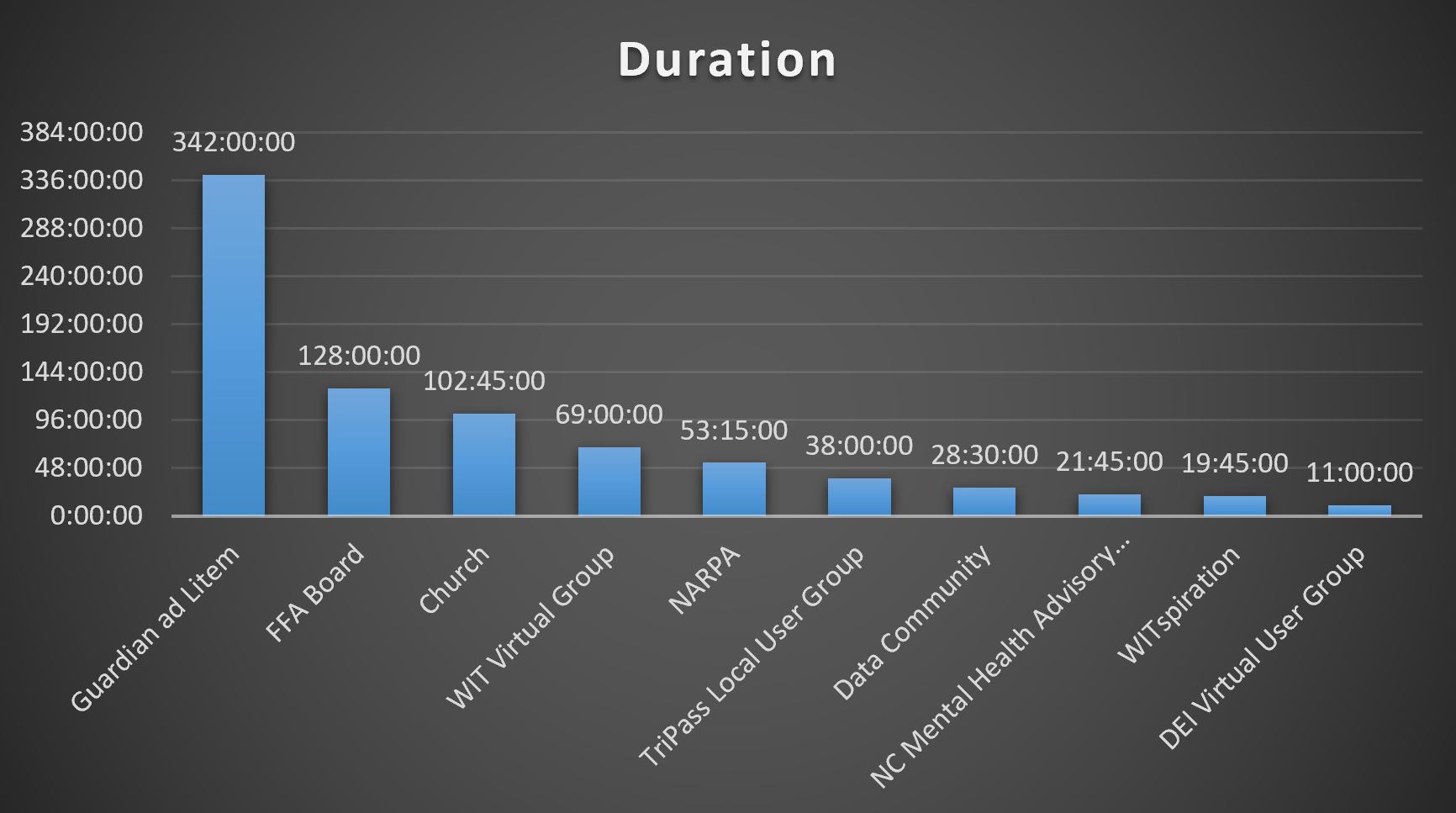
2025 was the year I finally slowed down enough to look closely at where my time was actually going. I started tracking my days—not out of obligation, but out of curiosity—and what I uncovered confirmed what I had quietly suspected for years. My hours weren’t being spent on titles, roles, or neatly defined projects. They were being poured into people, community, advocacy, and service. Volunteering wasn’t a line item on my calendar; it was the thread running through everything I touched. And seeing it laid out so clearly made me realize that volunteering isn’t just something I choose to do. It’s the way I live my life. Below is a chart that shows hours by different areas I volunteer in for the year:
What stood out most wasn’t the number of hours—it was the consistency. Week after week, I found myself showing up in ways that felt instinctive rather than intentional. Supporting the data community, mentoring new professionals, advocating for kids who needed a steady voice, championing mental health awareness, and strengthening connections through the foster family alliance… none of it felt like “extra” work. It felt like alignment. The more I paid attention, the more I realized that service had quietly become the backbone of my year, shaping my routines, my relationships, and my sense of purpose. Below is a chart that shows hours week by week: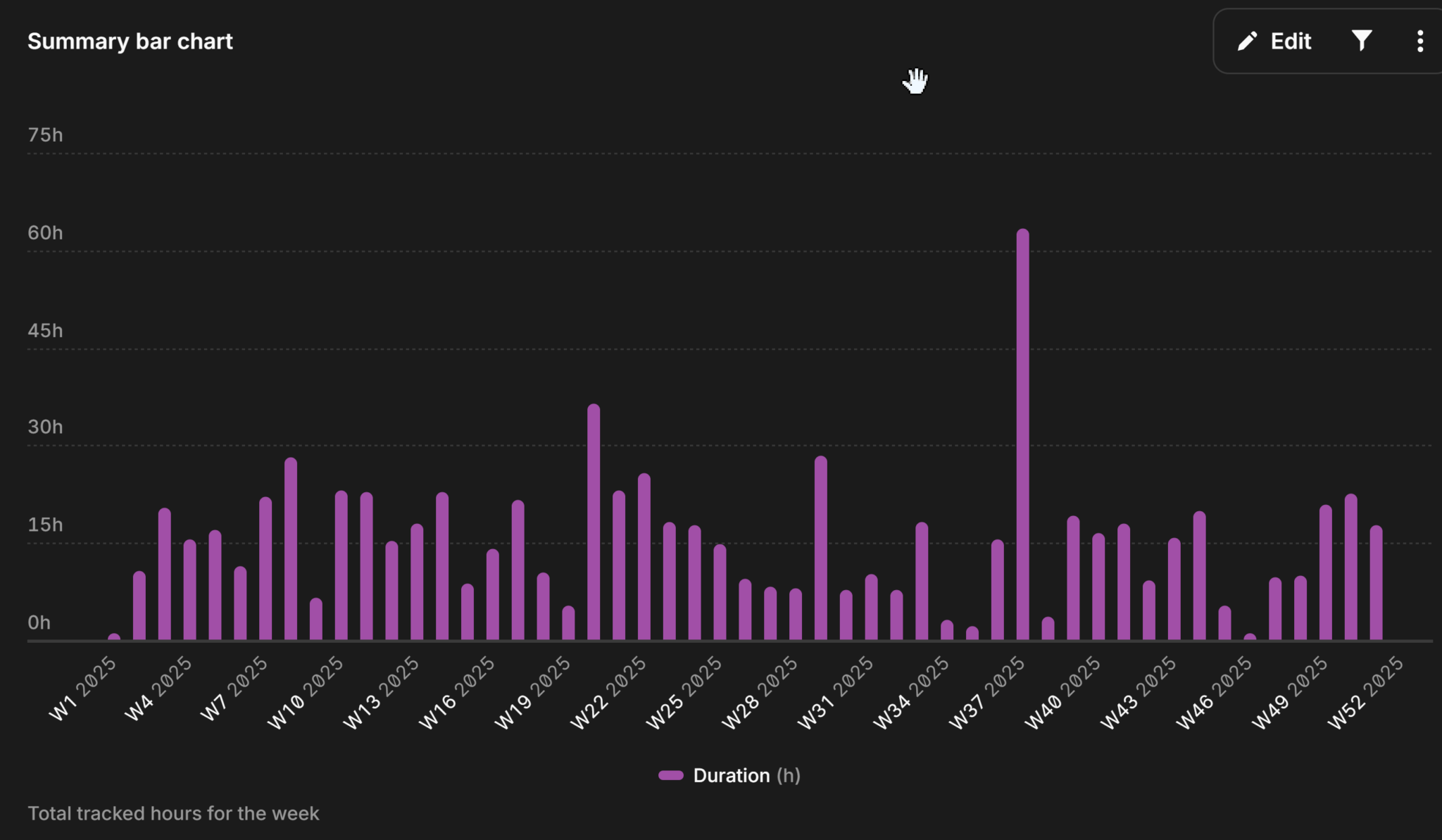
Showing Up for the Data Community
So much of my year was spent inside the data community—a place that has shaped my career, my friendships, and my sense of belonging. In 2025, my involvement deepened in ways I didn’t fully anticipate. Designing conference tracks, reviewing content, mentoring new speakers, and helping user groups thrive became a steady rhythm in my life. From helping to lead the WIT Virtual Group, DEI Virtual Group, and TriPASS Local User Group, to contributing behind the scenes at events like the PASS Community Data Summit and SQLSaturday Raleigh, each space reminded me why this community matters so much. And as a co‑creator of WITspiration, a space built to provide mentorship and fellowship for women in tech, I felt especially proud to help nurture a community where people feel supported, encouraged, and connected. These weren’t tasks I checked off; they were opportunities to lift others up, to create space for new voices, and to help people feel seen in a field that can sometimes feel overwhelming. The community has given me so much over the years, and giving back felt like the most natural thing in the world.
Advocating for Mental Health
Mental health advocacy remained a steady and meaningful part of my life this year, but 2025 brought a new level of responsibility and impact. I joined the North Carolina Mental Health Advisory Committee, a role that allowed me to contribute to conversations shaping how our state supports individuals and families navigating mental health challenges. As someone who has faced my own mental health struggles, this work carries a personal weight. It’s not abstract to me—it’s lived experience. It’s understanding how hard it can be to ask for help, how isolating it can feel, and how transformative the right support can be.
Beyond the meetings and policy discussions, my advocacy showed up in everyday moments—sharing resources, speaking openly about the importance of support systems, and being a steady, compassionate presence for those who needed someone to listen. The stigma surrounding mental health is still far too heavy, and I’ve learned that real change often begins with honest conversations and consistent, human connections. My work in this space wasn’t loud or performative; it was intentional, grounded, and rooted in the belief that everyone deserves access to understanding, dignity, and care.
Standing with the Foster Family Alliance
My work with the foster care community grew even deeper in 2025. As the President of the Board of Directors for the Foster Family Alliance, I had the privilege of supporting families who open their homes and hearts to children navigating some of the most difficult moments of their lives. This role wasn’t just administrative—it was relational. It meant learning about caregivers’ struggles, understanding their challenges, advocating for resources, and helping strengthen a network built on compassion and resilience.
One of the most meaningful steps I took this year was becoming a Mental Health First Aid Youth Instructor. With so many foster families caring for children who have experienced trauma, I wanted to equip caregivers with practical tools and confidence. Teaching two MHFA Youth classes to foster parents was a powerful reminder of how much caregivers carry—and how much they benefit from community, knowledge, and support. Watching them lean into the material, ask thoughtful questions, and connect with one another reinforced why this work matters so deeply.
Every conversation, every training session, every moment spent connecting families to support reminded me how vital community care truly is. The foster care system can be overwhelming, and families often feel unseen or unsupported. Being part of an organization dedicated to changing that—one family at a time—was both humbling and energizing. It strengthened my belief that service isn’t abstract; it’s built through real people showing up for one another in meaningful, consistent ways.
Being a Steady Voice as a Guardian ad Litem
My work as a Guardian ad Litem remained one of the most meaningful parts of my year. I began 2025 advocating for nine children, each with their own story, their own challenges, and their own hopes for stability. Over the course of the year, two of them aged out of the system—an emotional milestone that carries both pride and worry, knowing they’re stepping into adulthood without the safety net many of their peers take for granted. Four children found a permanent family, moments that reminded me why this work matters so deeply. And, as life in the system often goes, I also picked up a new case along the way.
By the end of the year, I closed it out with three children still on my caseload—three young people I continue to show up for, advocate for, and stand beside as they navigate a system that can feel overwhelming even on the best days. I’ve been doing this work for 22 years, and in that time, I’ve had the honor of advocating for 67 children. Each one has left an imprint on me. Each one has shaped the way I understand resilience, compassion, and the power of simply being a steady presence in a child’s life.
This work is especially close to my heart because of how I grew up. I experienced abuse, and there was no one there to speak up for me or stand beside me when I needed it most. That absence shaped me—but it also fuels me. It’s the reason I show up with such intention. It’s why I fight so hard for every child on my caseload. I know what it means to feel alone, and I’m determined that the children I serve never have to feel that way.
This role isn’t glamorous. It’s quiet, emotional, and often heavy. But it’s also profoundly meaningful. Every visit, every report, every conversation reinforces the same truth: showing up consistently can change a child’s trajectory—and that is a responsibility I carry with deep humility.
Carrying This Forward Into 2026
As I look back on everything I poured myself into this year, I’m reminded that service shows up in both the big commitments and the quiet, consistent ones. Beyond my advocacy work and community roles, I also volunteered at my church on the production team—showing up at least once a month to help make the tech behind the scenes work. And I continued offering my technical skills to NARPA, helping with behind‑the‑scenes tech needs that keep their mission moving forward. These may seem like small contributions, but they’re part of the same thread that runs through everything I do: showing up where I’m needed, using what I have to help others, and choosing service as a way of life.
I’m not setting resolutions around volunteering for 2026. I don’t need to. Service is already woven into who I am. Instead, I’m focusing on being intentional—choosing opportunities that align with my values, deepen my impact, and support the communities I care about most. If 2025 revealed the truth of how I’m wired, then 2026 is about honoring that truth and continuing to show up with purpose, compassion, and consistency.
And if there’s one thing I hope others take into the new year, it’s this: you don’t have to overhaul your life to try to make a difference. Pick one small way to be of service—one hour, one act, one moment of showing up. Hold a door open for someone who’s struggling. Offer to mentor a new colleague. Volunteer once a quarter. Send a note of encouragement. Support a local nonprofit. Whatever it is, let it be simple and sustainable. Small acts, done consistently, have a way of changing lives—including your own. Drop me a line in the comments and share how you try to make a difference in your community; you might just give others ideas or encouragement.
Because for me, volunteering isn’t an activity. It’s the way I live my life. And there’s room for all of us to make the world a little kinder in 2026.